By Elizabeth.
Newborn Found Buried Alive in Vietnam: A Case That Shook Public Conscience

From now on, Uncle Ho’s doctors will be my family, I hope you are safe.
A newborn baby girl was found alive after allegedly being buried under soil in a rubber plantation in Vietnam’s Central Highlands, authorities confirmed earlier this week. The infant, discovered with her umbilical cord still attached, was rescued after local residents heard faint cries coming from beneath the ground.
“Hearing the crying, I went to the back of the garden and saw the dog repeatedly scratching the ground with its paw. Upon closer inspection, I was shocked to see a tiny arm moving, and then the pale face of the baby appeared beneath the dirt. Seeing this, I shouted for everyone to help rescue the baby” Mr. Rơ Lan Bik recalled.
The incident occurred in Gia Lai Province, where workers reportedly noticed unusual movement in the soil late at night. Upon digging, they found the baby partially buried, struggling to breathe. Emergency services were called immediately, and the child was transported to a local hospital, where doctors said she was suffering from hypothermia and exhaustion but was later stabilized.
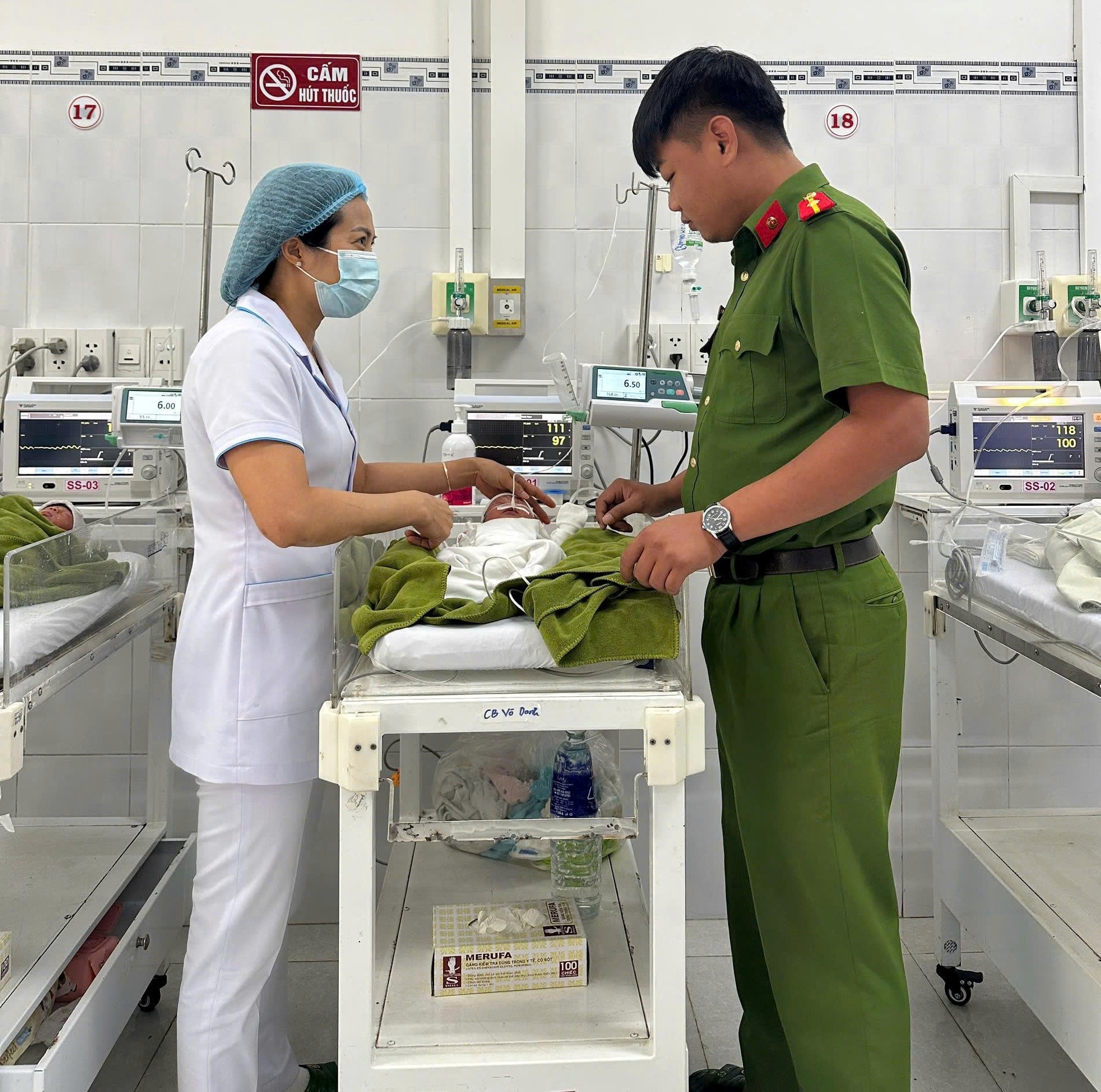
The local police promptly transported the baby girl over a distance of more than 100 kilometers to Gia Lai Children’s Hospital for emergency treatment.
Police have launched an investigation to determine who abandoned the infant and under what circumstances. Officials have not yet released details regarding suspects, citing the ongoing nature of the case.
For now, the baby remains under medical supervision and protective care.
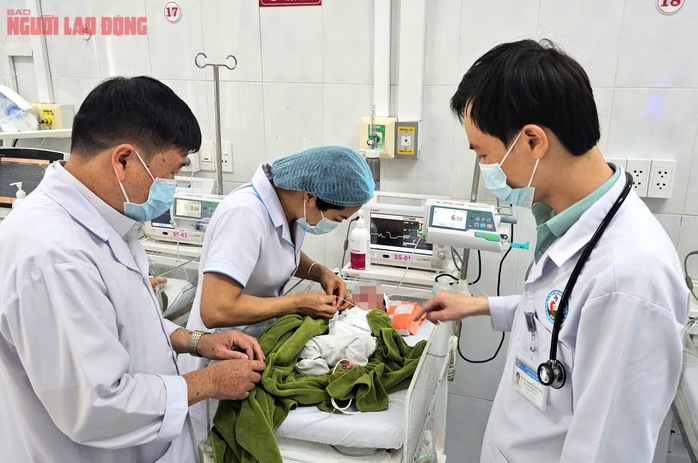
Doctors at Gia Lai Provincial Children’s Hospital are actively caring for the girl suspected of being buried alive.
Those are the facts — stark, brief, and almost clinical in their telling. Yet behind them lies a story so disturbing that it has ignited outrage across Vietnam and far beyond its borders.
The Baby’s Current Condition
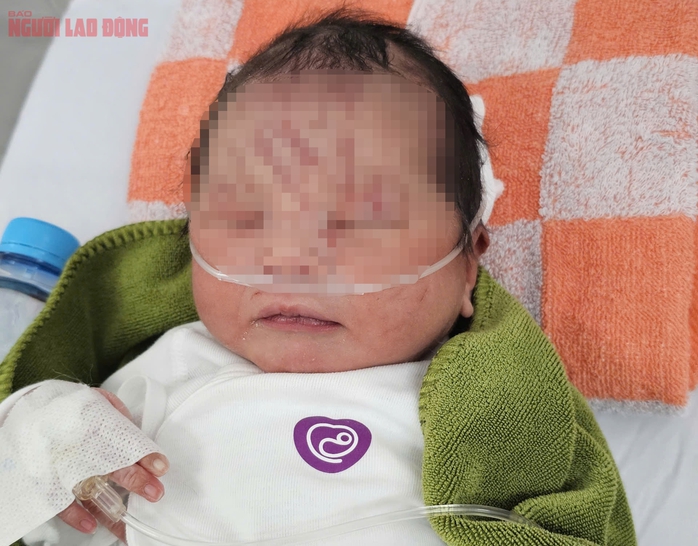
A newborn baby buried alive in a rubber garden was discovered in time and rescued – Photo 1.
According to medical officials, the newborn is currently in stable condition after receiving emergency treatment. Doctors said the infant was admitted suffering from hypothermia, dehydration, and physical exhaustion consistent with prolonged exposure to cold and lack of oxygen. Initial assessments also noted minor abrasions, likely caused by contact with soil and debris.

The newborn has many scratches on the face and red marks on the arms and calves, possibly caused by animal scratches and insect bites. The hospital staff confirmed that the baby is now able to breathe independently, maintain body warmth, and bottle-feed under close supervision.
Following intensive care, the baby has responded positively to treatment. Hospital staff confirmed that she is now able to breathe independently, maintain body temperature, and feed under close supervision. While physicians caution that newborns exposed to such extreme conditions require ongoing monitoring, there are currently no immediate signs of life-threatening complications.
Local authorities stated that the child remains under medical protection and social services oversight. Plans are being discussed to ensure her long-term safety and welfare once she is discharged, including placement under state protection while the investigation continues.
For now, the hospital room where she rests has become a quiet symbol of resilience — a place where a life nearly lost has been given a second chance.
When Reporting Ends and Moral Reckoning Begins
There are moments when journalism’s obligation to neutrality reaches its limit — not because facts are unclear, but because the moral weight of those facts demands acknowledgment.
A newborn baby, only hours old, was buried alive.
That sentence alone should stop any reader cold.
This was not a case of stillbirth. This was not a tragic misunderstanding. This was a living child, capable of crying, breathing, and suffering — placed into the ground and covered with soil, left to suffocate in darkness.
The infant had no name, no legal identity, and no ability to defend herself. She had existed in the world for mere moments before someone decided that her life was expendable.
That she survived at all is extraordinary. That she was subjected to this act is indefensible.
The Anatomy of an Unthinkable Act
Burying a newborn alive is not an act that occurs by accident. It requires time, physical effort, and a conscious suppression of empathy. It requires ignoring the most primal human signals — the cry of an infant, the instinct to protect, the biological bond between parent and child.
Whatever circumstances preceded this act — fear, shame, poverty, social pressure — none of them diminish its brutality.
Societies may debate mitigating factors in courtrooms. They may examine mental health, social stigma, or economic distress. These discussions are necessary, but they must never obscure a fundamental truth: attempting to end the life of a newborn is an extreme act of violence.
To frame it otherwise risks normalizing the unthinkable.
A Public Reaction Rooted in Shared Humanity
The response to this case has been swift and emotional. Images and reports spread rapidly on social media, accompanied by disbelief, anger, and grief. Parents wrote about holding their children tighter. Medical professionals spoke of the trauma inflicted on such a fragile body. Ordinary citizens asked how such an act could occur in any community.
The outrage is not merely performative. It reflects something deeply human — a collective understanding that infants occupy a sacred moral space. They represent possibility, vulnerability, and the future itself.
When that space is violated, outrage becomes not only justified, but necessary.
Beyond Individual Blame: A Broader Failure
While accountability for those directly responsible is essential, focusing solely on individual guilt risks ignoring larger systemic failures.
This case raises uncomfortable questions:
- How isolated must a woman feel to believe burial is her only option?
- What support structures failed to intervene before violence occurred?
- How many pregnancies unfold in silence, fear, and stigma?
Around the world, unwanted pregnancies continue to intersect with shame, misinformation, and lack of access to resources. In such environments, infants become collateral damage — invisible until tragedy forces visibility.
Understanding these conditions does not excuse violence. But ignoring them guarantees recurrence.
The Limits of Sympathy
There is a tendency, particularly in international discourse, to soften narratives involving maternal violence — to emphasize hardship while downplaying harm. This instinct, however well-intentioned, becomes dangerous when it erases the victim.
In this case, the primary victim is unmistakable: a newborn child who nearly lost her life before it had begun.
Empathy must never come at the cost of justice. Compassion for difficult circumstances cannot eclipse the rights of the most vulnerable.
The Baby at the Center of the Story
Too often, media attention shifts quickly from victims to perpetrators — their motives, their psychology, their background. But this story demands that we keep our focus where it belongs.
On the baby.
She endured cold, suffocation, and physical trauma. Her first experience of the world was pain and abandonment. Her survival depended not on adult protection, but on chance — on the sensitivity of strangers who heard her cries.
That is not a system. That is luck.
And no child’s life should depend on luck.
What Justice Should Look Like
Justice in this case must be multifaceted.
It must include:
- A thorough and transparent investigation
- Legal accountability proportionate to the severity of the act
- Long-term protection and care for the child
But justice must also be preventative.
Governments and communities must invest in:
- Accessible maternal healthcare and counseling
- Safe and legal alternatives for mothers in crisis
- Public education that replaces shame with support
- Clear reporting mechanisms when children are at risk
Without these measures, outrage becomes ritual rather than remedy.
Why This Story Resonates Globally
Although this incident occurred in Vietnam, its implications are universal. Cases of newborn abandonment and infanticide, while rare, occur across cultures, economies, and borders.
What varies is not the cruelty of the act, but society’s willingness to confront it honestly.
This story resonates because it forces a simple but uncomfortable reckoning: a society is judged by how it protects those who cannot protect themselves.
On that night, protection failed.
A Life That Must Mean More Than Survival
The baby survived. That fact alone should inspire gratitude. But survival is not enough.
She deserves safety, dignity, and a future free from the violence that marked her first hours. She deserves to grow up knowing that her life matters — not as a symbol, not as a headline, but as a human being.
Her story must not fade when the news cycle moves on.
The Responsibility of Remembering
If this case becomes just another viral outrage — briefly intense, quickly forgotten — then society has learned nothing.
Remembering is a moral act.
Remembering means demanding reform, supporting vulnerable families, and refusing to accept narratives that minimize harm to children.
A newborn buried alive is not merely a tragedy. It is a warning — one that should compel action long after the headlines disappear.
Because humanity is not measured by comfort or convenience, but by how fiercely it defends its most helpless members.
And this child deserved that defense from the very beginning.